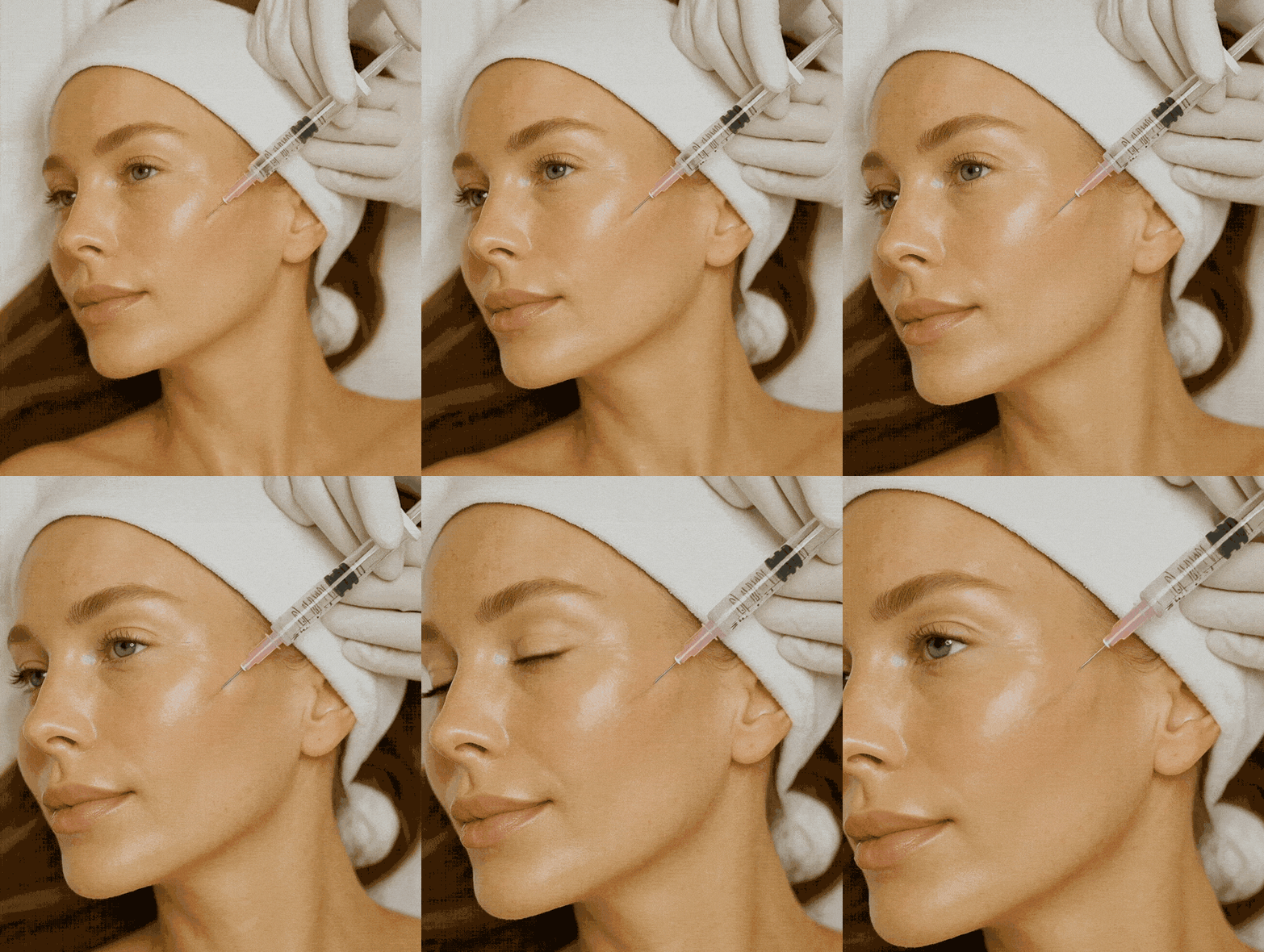

Botox is one of the safest and most popular cosmetic treatments in the world when it is performed by the right injector. The difference between a smooth, natural result and a frozen, drooping, or asymmetrical one often comes down to a few millimeters, a few units, and the skill of the person holding the syringe. Some areas of the face are forgiving. Others are not.
This guide walks through the five most sensitive (and most commonly mishandled) Botox zones on the face, the specific Botox risks and mistakes that can happen in each one, what to avoid when getting Botox in any of them, and the questions you should ask your injector before any needle goes near your skin.
Why Some Botox Areas Are Riskier Than Others
Botox is a clinically studied neuromodulator that temporarily relaxes targeted facial muscles to smooth wrinkles and prevent new ones from forming. When it is administered with skill, the results look refreshed and natural. When it is not, the line between subtle and noticeably altered is thinner than most people realize.
That line is especially thin in areas where facial muscles are densely layered, closely connected to other muscle groups, or responsible for functions like blinking, smiling, eating, or speaking. Knowing the most dangerous areas for Botox is the best way to walk into your appointment prepared.
1. Forehead and Frown Lines
The forehead and the glabellar region (the area between the brows) are the most-requested Botox treatment zones, but they are also the most technically demanding. These muscles raise your eyebrows and convey emotions like surprise and concern. Over-treating this zone can lead to a frozen look, drooping brows, or a heavy feeling around the eyes that changes your entire expression.
Common Botox Risks in This Area
- Drooping
- Uneven or asymmetric results
- Loss of natural expressiveness
- Headache or muscle heaviness from over-relaxation
What to Ask Your Injector
- How do you assess muscle strength and movement before treatment?
- How do you balance smoothing lines with preserving natural movement?
- How do you prevent brow heaviness or a frozen appearance?
A skilled injector tailors both the dose and placement to your anatomy, often using smaller, more precise amounts to maintain expression while softening lines. A smooth forehead should still allow for natural emotion.
2. Around the Eyes
The muscles around the eyes are some of the most delicate on the face. They control blinking, expression, and the subtle warmth your eyes communicate when you smile. Botox is commonly used here to soften crow’s feet, but injections placed too close to the eyelid or at the wrong depth can cause eyelid drooping (ptosis), asymmetry, or a tired, hollowed look.
Common Botox Risks in This Area
- Eyelid or eyebrow droop
- Hollowed or uneven appearance
- Difficulty fully closing the eye
- Fixed, unnatural expressions
What to Ask Your Injector
- Can you show before-and-after photos of crow’s feet treatments you have performed?
- How do you determine safe injection points around the eyes?
- What steps do you take to avoid eyelid drooping?
The best results in this area come from a nuanced understanding of the orbicularis oculi muscle and the surrounding anatomy. A few millimeters in the wrong direction can dramatically change your appearance. Always choose an experienced injector with a conservative approach in this region.
3. Nose and Bunny Lines
Bunny lines are the fine wrinkles that appear along the sides of the nose when you scrunch it. They often become more visible with age or repeated movement. Treating them with Botox requires a careful, advanced approach because the muscles in this area connect directly to the muscles controlling your mouth and upper lip. Improper placement can affect your smile or cause unusual lip movement.
Common Botox Mistakes in This Area
- Flattened or unnatural-looking nose
- Smile distortion or upper lip droop
- Visible product migration
What to Ask Your Injector
- How frequently do you treat bunny lines, and what is your technique?
- How do you protect my natural smile during treatment?
- What side effects are unique to this area?
An experienced injector uses minimal doses, precise placement, and a clear plan to maintain natural harmony among your nose, lips, and surrounding features.
4. Mouth and Lips
The area around the mouth contains many small, powerful muscles that control speech, smiling, and eating. Botox can be used here to soften vertical lip lines, lift downturned corners, or create a subtle lip flip. But the margin for error is small. Over-treatment can lead to slurred speech, drooling, or an unnatural smile.
Common Botox Dangers in This Area
- Impaired speech or trouble pronouncing certain words
- A drooping or uneven smile
- Difficulty drinking through a straw
- Stiff or unnatural lip movement
What to Ask Your Injector
- What is your philosophy on Botox around the mouth?
- How do you make sure results look natural and do not affect speech?
- Can you explain the difference between a lip flip and lip filler?
A conservative approach matters here more than almost anywhere else on the face, especially if you are new to Botox in this region. Your injector should assess your baseline movement, explain exactly where the product is going, and never push you to do more than what is safe.
5. Chin, Jawline, and Neck
The lower face and neck are some of the most advanced areas to treat with Botox. Done well, treatment can smooth chin dimpling, slim a square jawline, or soften vertical neck bands. Done poorly, misplaced injections can affect chewing, swallowing, or speaking. These treatments involve large, powerful muscles like the masseter and platysma, where even a small mistake in dose or placement can lead to noticeable issues.
Common Botox Risks in This Area
- Weakness in the chewing muscles
- Difficulty swallowing
- Loss of jawline definition or asymmetry
- An overly relaxed chin that creates an elongated, “witch’s chin” appearance
- Uneven neck contours
What to Ask Your Injector
- How do you evaluate candidacy for lower face and neck Botox?
- What is your experience with masseter and platysma treatments?
- How do you balance aesthetic improvements with preserving function?
- How do you protect my ability to speak, chew, and swallow normally?
Only an injector with deep anatomical knowledge should treat these unsafe Botox areas without proper training. Lower face and neck treatments require precise dosing, careful placement, and a clear understanding of how each muscle connects to the surrounding muscles. Ask about their specific experience with masseter slimming and platysma band treatments before scheduling.
How to Avoid Bad Botox Results
The biggest factor in avoiding bad Botox results is who is holding the syringe. The bad Botox areas above all share one thing in common: they punish poor technique. A few habits can dramatically reduce your risk of complications:
- Choose a medically trained injector who specializes in Botox and dermal fillers, not someone treating it as a side service
- Look for an injector who uses only genuine, FDA-approved neuromodulators
- Ask to see before-and-after photos of patients with concerns similar to yours
- Disclose your full medical history, including any neurological or muscular conditions
- Avoid blood thinners, alcohol, and certain supplements before your appointment, as advised
- Ask your injector to walk through the treatment plan, including units, placement, and expected results, before starting
- Get a second opinion if anything feels rushed, pressured, or unclear
A great injector welcomes questions and prioritizes your safety over their schedule. If you ever feel rushed or unheard, that is your sign to walk away and look elsewhere.
What to Do If You Are Unhappy With Your Botox Results
Even with the best preparation, Botox results occasionally do not turn out as expected. The good news is that most concerns are temporary and can often be corrected. If something looks off right after your treatment, give it time. Botox takes 10 to 14 days to fully settle, and what feels asymmetric, frozen, or heavy at first often evens out as the product reaches its full effect. If you still have concerns after 2 weeks, contact the injector who performed the treatment. They can examine your results and explain your options for refinement.
If you are unhappy with the results from another injector, our team can offer a second opinion. Some Botox mistakes can be softened with carefully placed additional units. Others simply need time to wear off, since most Botox effects fully resolve within 3 to 4 months. Either way, an experienced injector can help you understand what is happening and plan a smarter approach for next time.
Schedule a Safe, Personalized Botox Consultation at Evexia Medspa
Safe, beautiful results start with the right injector. At Evexia Medspa, our injectors know how to navigate dangerous Botox areas with a conservative, personalized approach so you leave looking refreshed and still completely like yourself. As a leading provider of Botox in McLean, VA, we are proud to serve clients across Northern Virginia and Washington, D.C., including Tyson’s Corner, Arlington, Falls Church, Great Falls, Fairfax County, and Vienna.
Call (571) 774-0965 to schedule your complimentary consultation today and find out how the right plan, with the right injector, can deliver your desired outcome.