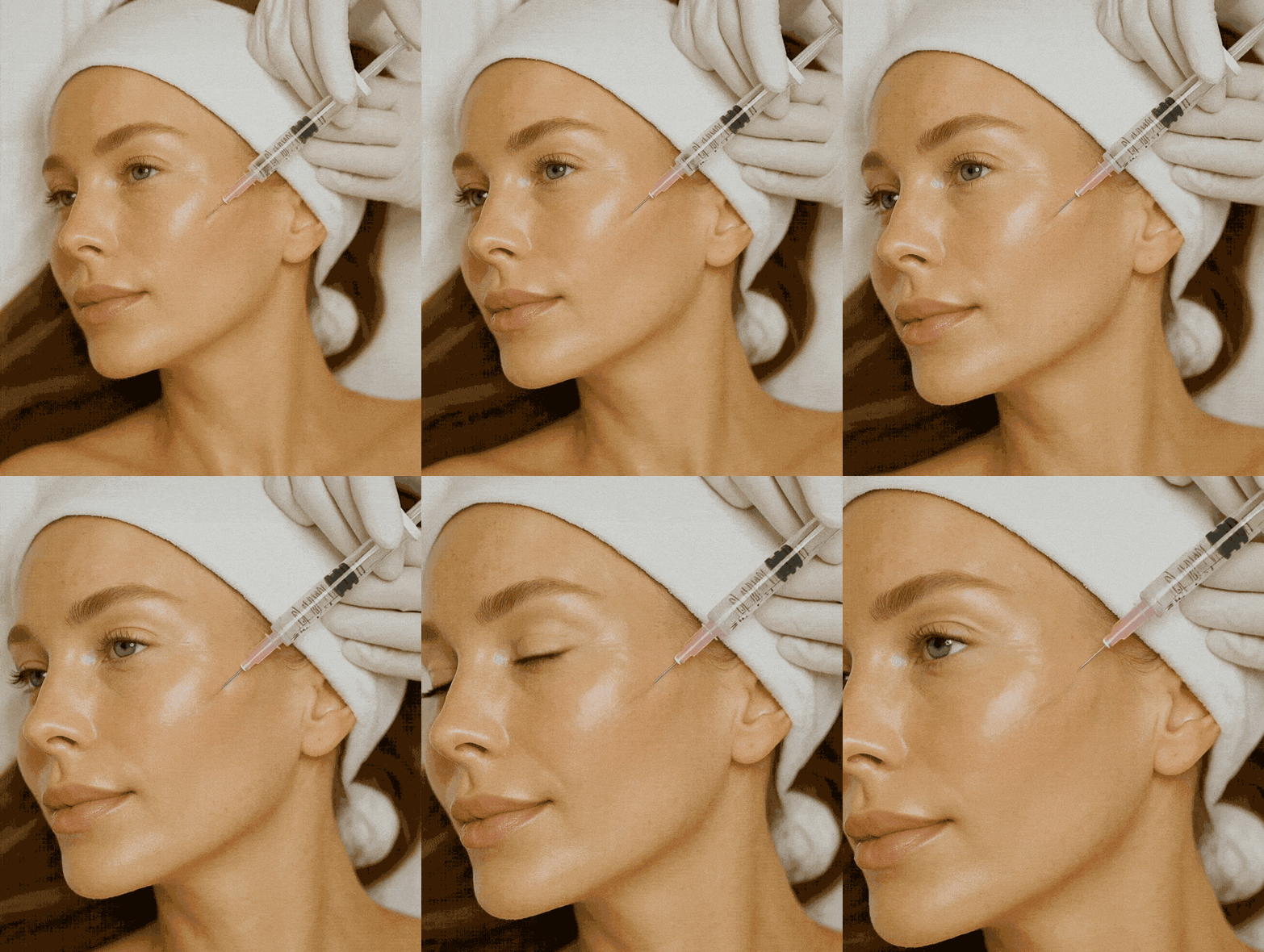
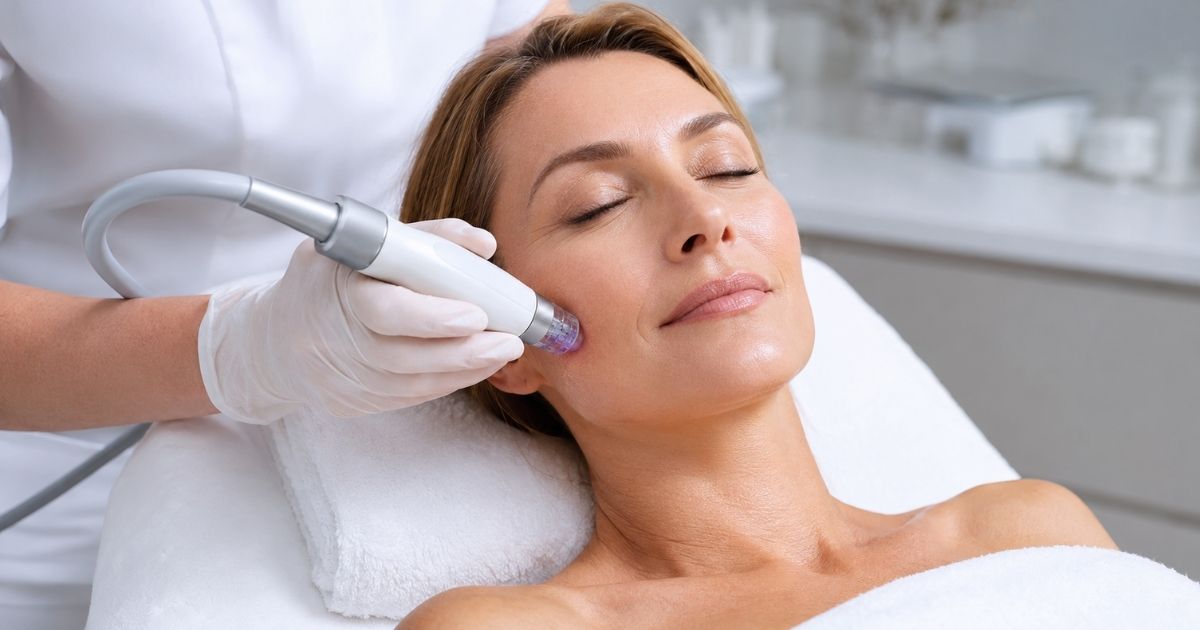

Fine lines, sun damage, uneven skin texture, and acne scars can be difficult to address with topical skincare alone. Laser resurfacing uses controlled laser energy to treat targeted layers of skin and stimulate the skin’s natural healing process, making it an option for a range of textural and signs-of-aging concerns.
But “laser resurfacing” describes a category of treatments, not one specific procedure. Different lasers and treatment approaches vary in how deeply they treat the skin, how much surface area they affect, and how much downtime they require.
This guide breaks down the different types of laser resurfacing, including fractional and full-field treatments, ablative and non-ablative lasers, and CO₂ resurfacing. We’ll also explain how these approaches differ and what factors can influence your choice for concerns such as acne scars, fine lines, and uneven texture. Evexia Medspa offers Solaria CO₂ laser resurfacing as one option for patients considering more intensive skin resurfacing.
What Is Laser Resurfacing for Improving Skin?
Laser resurfacing is a medical-aesthetic procedure that delivers focused light energy to the skin to trigger controlled renewal. The goal is to remove or remodel damaged tissue and stimulate collagen production, resulting in visibly smoother, firmer, and more even skin. Laser resurfacing can be tailored to address a range of skin concerns, including:
- Fine lines and wrinkles, especially around the eyes and mouth
- Uneven skin texture
- Sun damage, including age spots and discoloration
- Acne scars and other textural irregularities
- Enlarged pores
- Overall skin rejuvenation and renewal
By customizing laser parameters, providers can offer gentle treatments for subtle improvement or more intensive sessions for dramatic change. The ability to adjust intensity makes laser resurfacing versatile for different skin types and concerns.

Understanding the Different Laser Resurfacing Approaches
Laser resurfacing falls into several categories, and understanding these distinctions can make it easier to compare your options. Two of the most useful distinctions are:
- Fractional vs. full-field resurfacing: Describes how much of the skin’s surface is treated during a session.
- Ablative vs. non-ablative lasers: Describes how the laser interacts with the skin, including whether it removes targeted tissue layers or heats the skin without removing the surface.
These categories can overlap. For example, a CO₂ laser can be used for fractional or full-field resurfacing, depending on the treatment approach and settings. The appropriate combination depends on the skin concern being treated, the desired level of resurfacing, tolerance for downtime, and the provider’s assessment.
Fractional Laser Resurfacing: Targeted Renewal for Enhanced Recovery
Fractional laser resurfacing delivers laser energy in a grid-like pattern, creating microscopic treatment zones surrounded by untreated skin. This approach leaves healthy tissue intact between the treated columns, which helps speed healing and reduce overall downtime. Fractional lasers can be ablative or non-ablative, and their intensity can vary widely, from mild to intense.
Some of the main benefits of fractional laser resurfacing include:
- Shorter recovery compared to full-field resurfacing
- Collagen stimulation and skin remodeling with less risk of side effects
- Can address fine lines, mild scarring, and early signs of aging
Not all fractional treatments are gentle—some can be quite powerful, especially when higher energy is used or when ablative fractional lasers are selected.
Full-Field Laser Resurfacing: More Comprehensive Rejuvenation
Full-field laser resurfacing treats the entire targeted skin surface rather than leaving untreated areas between treatment zones. Because the laser treats a larger portion of the surface at once, this approach is generally more intensive than fractional resurfacing and may be used for more pronounced wrinkles, sun damage, or scarring.
The main aspects of full-field resurfacing include:
- Treats the entire targeted area
- Provides more intensive resurfacing of the skin’s surface
- Generally involves a longer and more involved recovery than fractional treatments
Full-field resurfacing may be appropriate for patients looking for more substantial improvement in skin texture and who are comfortable with a longer healing period. The appropriate approach depends on the concern being treated, the patient’s skin, and the provider’s recommendations.
Ablative vs. Non-Ablative Lasers: Understanding Their Impact on Your Skin
Laser resurfacing technologies also fall into ablative and non-ablative categories. This distinction refers to how the laser interacts with your skin’s surface and deeper layers.
Ablative Laser Resurfacing: Deep Renewal for Transformative Outcomes
Ablative lasers, such as CO₂ and Erbium:YAG, remove the outer layers of the skin (epidermis) and heat the underlying tissue. This triggers a strong healing response, stimulating new collagen production and replacing damaged cells with fresh, healthier tissue.
Highlights of ablative laser resurfacing:
- Provides dramatic improvement for deep lines, wrinkles, and scarring
- Results in a smoother, more even skin texture
- Involves more downtime and aftercare than non-ablative options
CO₂ lasers, including the Solaria CO₂ laser, are a prime example of ablative technology. They are often chosen for their ability to address advanced photoaging, textural irregularities, and certain types of acne scars.
Non-Ablative Laser Resurfacing: Gentle Rejuvenation with Minimal Downtime
Non-ablative lasers deliver heat to deeper skin layers while leaving the surface intact. This process stimulates collagen and elastin remodeling with less disruption to the epidermis.
Benefits of non-ablative resurfacing:
- Lower risk of surface complications
- Minimal downtime: often a day or two of redness or swelling
- Gradual improvement with a series of treatments
Non-ablative lasers are often recommended for patients seeking subtle improvement or maintenance with little interruption to their routine. While results are typically less dramatic compared to ablative lasers, these treatments can be highly effective for early signs of aging and mild pigmentation.
CO₂ Laser Resurfacing
CO₂ laser resurfacing is an ablative resurfacing treatment used to address signs of aging, sun damage, uneven texture, and certain types of scarring. The laser delivers energy that removes targeted skin layers while stimulating collagen production during healing.
CO₂ resurfacing can be performed using either fractional or full-field treatment. Fractional treatment targets microscopic columns of skin while leaving surrounding tissue intact, while full-field resurfacing treats the entire targeted surface. This lets providers adjust the approach based on the concern being addressed and the downtime a patient is comfortable with.
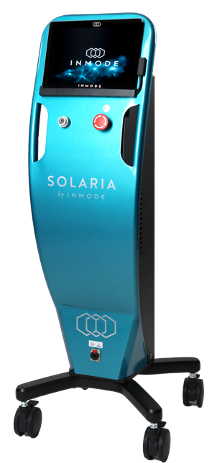
At Evexia Medspa, we use the Solaria CO₂ laser for skin resurfacing and rejuvenation. The treatment can be customized based on the patient’s skin concerns, desired results, and tolerance for downtime.
Fractional vs. Full-Field Laser Resurfacing: A Clear Comparison
| Fractional Laser Resurfacing | Full-Field Laser Resurfacing | |
|---|---|---|
| Treatment Area | Microscopic treatment zones | Entire targeted surface |
| Recovery | Generally less extensive | Generally more extensive |
| Intensity | Can vary (mild to intensive) | Typically more intensive |
| Best For | Depends on goals and skin | Depends on goals and skin |
It is important to remember that fractional does not automatically mean gentle or superficial; some fractional treatments can be quite powerful, depending on the laser settings used.
CoolPeel vs. Traditional CO₂
CoolPeel is a specific application of CO₂ laser technology that uses very short energy pulses in a fractional pattern. The approach resurfaces the skin while limiting heat buildup, which may allow for a shorter recovery period.
Traditional CO₂ resurfacing generally uses higher energy levels and removes more tissue. This can make it appropriate for deeper wrinkles, more significant texture concerns, and certain types of scarring, but it also typically involves more downtime and aftercare.
How they differ:
- CoolPeel: Uses fractional CO₂ energy, emphasizing limited heat buildup and reduced downtime.
- Traditional CO₂: Provides more intensive resurfacing and can address deeper skin concerns, but usually requires a longer recovery.
- Both: Use CO₂ laser technology, but differ in how the energy is delivered and how deeply the skin is treated.
The right approach depends on the degree of resurfacing needed, your skin concerns, and how much downtime you are comfortable with. A provider can help determine the right treatment approach for your goals.
Finding the Best Laser for Acne Scars: Personalized Solutions for Clearer Skin
When treating acne scars, there is no single “best” type of laser for every situation. The ideal approach depends on several factors:
- The type and depth of scarring (e.g., rolling, boxcar, ice pick)
- Your skin tone and risk for pigmentation changes
- The presence of additional texture or color concerns
- Previous treatments and your response to them
- How much recovery time you can accommodate
CO₂ laser resurfacing can be appropriate for certain types of acne scarring, especially when deeper remodeling is needed. Fractional ablative lasers may help improve more extensive or stubborn scars, while non-ablative options may suit milder cases or those at higher risk of pigmentation changes. Significant improvement is possible, but results vary, and scar removal cannot be guaranteed.
For an in-depth comparison of CO₂ lasers for skin rejuvenation, see The Best CO₂ Lasers for Skin Rejuvenation: Comparing Today’s Most Advanced Systems.
Choosing Your Ideal Laser Resurfacing Treatment: Expert Guidance for Lasting Results
Selecting the right laser resurfacing treatment is a process that begins with a thoughtful assessment of your:
- Primary skin concerns (wrinkles, scars, pigmentation, etc.)
- Skin type and tone (which can affect risk of pigmentation changes)
- Desired intensity of results
- Available downtime for recovery
- History of previous treatments
- Realistic expectations for improvement
A professional consultation ensures your treatment plan is safe, effective, and tailored to your unique goals. Remember, the strongest treatment is not always the right fit. Sometimes, a series of less intensive sessions yields better long-term results with minimal risk.
Laser Resurfacing Beyond: Complementary Treatments for Holistic Skin Health
Laser resurfacing is just one option within a suite of advanced skin rejuvenation treatments. Many patients benefit from combining or alternating laser resurfacing with other technologies to address different aspects of skin health, including:
- Morpheus8: Radiofrequency microneedling for deep skin tightening and remodeling
- QuantumRF: Non-surgical skin tightening and toning
- Microneedling: Collagen stimulation for texture and scarring
- Chemical Peels: Exfoliation and pigment correction
- IPL Skin Rejuvenation: Light-based treatment for spots and redness
- HydraFacial: Deep cleansing and hydration for a radiant glow
Your provider can recommend an integrated approach that supports both immediate improvement and long-term skin wellness.
Choosing the Right Laser Resurfacing Approach
There is no single “best” type of laser resurfacing for everyone. The right approach depends on factors such as the skin concern being treated, the depth of resurfacing needed, your skin characteristics, and how much downtime you are comfortable with.
A consultation with an experienced provider can help determine the right combination of laser type, treatment depth, and intensity for your goals. The goal is to address your concerns while considering your skin and recovery needs.
Evexia Medspa offers Solaria CO₂ laser resurfacing as one option for patients considering more intensive skin rejuvenation. If you are considering laser resurfacing, schedule a consultation to discuss your options and create a plan that is uniquely yours.
FAQs
What are the different types of laser resurfacing?
Laser resurfacing can be classified as fractional or full-field, and as ablative or non-ablative. These categories describe how much of the skin is treated and whether tissue is removed or simply heated. CO₂ laser resurfacing is a well-known example that can be delivered in both fractional and full-field modes.
What is the difference between fractional and full-field resurfacing?
Fractional resurfacing targets microscopic columns of skin, leaving the surrounding tissue untouched to speed healing. Full-field resurfacing treats the entire skin surface, resulting in more intensive results and recovery.
What is CO₂ laser resurfacing?
CO₂ laser resurfacing is an ablative treatment that uses a specific wavelength of light to remove damaged skin layers, stimulate collagen, and improve texture, wrinkles, and scars. It can be delivered as a fractional or full-field treatment.
What is the best type of laser for acne scars?
No single laser works best for all acne scars. The optimal treatment depends on the scar type, skin tone, prior treatments, and desired downtime. CO₂ lasers may suit some deeper scars.
Is fractional laser better than full-field resurfacing?
Neither approach is universally better. Fractional lasers typically offer faster recovery, while full-field treatments may deliver more dramatic improvement. The right choice depends on your skin goals and recovery preferences.
What is the difference between CoolPeel and traditional CO₂?
CoolPeel is a fractional CO₂ treatment that uses short energy pulses to resurface the skin while limiting heat buildup. Traditional CO₂ resurfacing is generally more intensive, treating deeper tissue layers and typically requiring more downtime. Both use CO₂ laser technology, but they differ in how the energy is delivered and how deep the treatment goes. The appropriate approach depends on your skin concerns, desired results, and tolerance for downtime.