

The first month of peptide therapy is rarely dramatic. It is more often a series of small changes that become easier to recognize once you know what to look for.
Sleep may improve before energy does. Recovery may feel different before anything changes in the mirror. And depending on your protocol, some results may not become noticeable until well beyond the first 30 days.
At Evexia Medspa in McLean, VA, we help patients understand that timeline from the beginning. Here is what typically happens after starting peptide therapy and what you can expect during the first month.
Key Takeaways
- The first few weeks are an adjustment period. Early changes usually show up in sleep and energy rather than anything visible.
- Injections are quick, and most people find them far easier than expected.
- Mild redness or swelling at the injection site is common and passes within a few days.
- With peptide therapy, the first month is part of a longer loading period, which is typically 3 to 6 months.
- Consistency matters more than anything else you do during this stretch.
Before Your First Injection
Nothing gets prescribed until we know what we are working with.
Your consultation covers your health history, what you are hoping to change, and whether peptide therapy is appropriate for you at all. From there, your provider selects a peptide or a combination based on your goals, whether that is recovery, energy, weight management, skin quality, or something else entirely.
Peptide Injections: What to Expect the First Time
This is where most of the nerves are and where most of them turn out to be unnecessary.
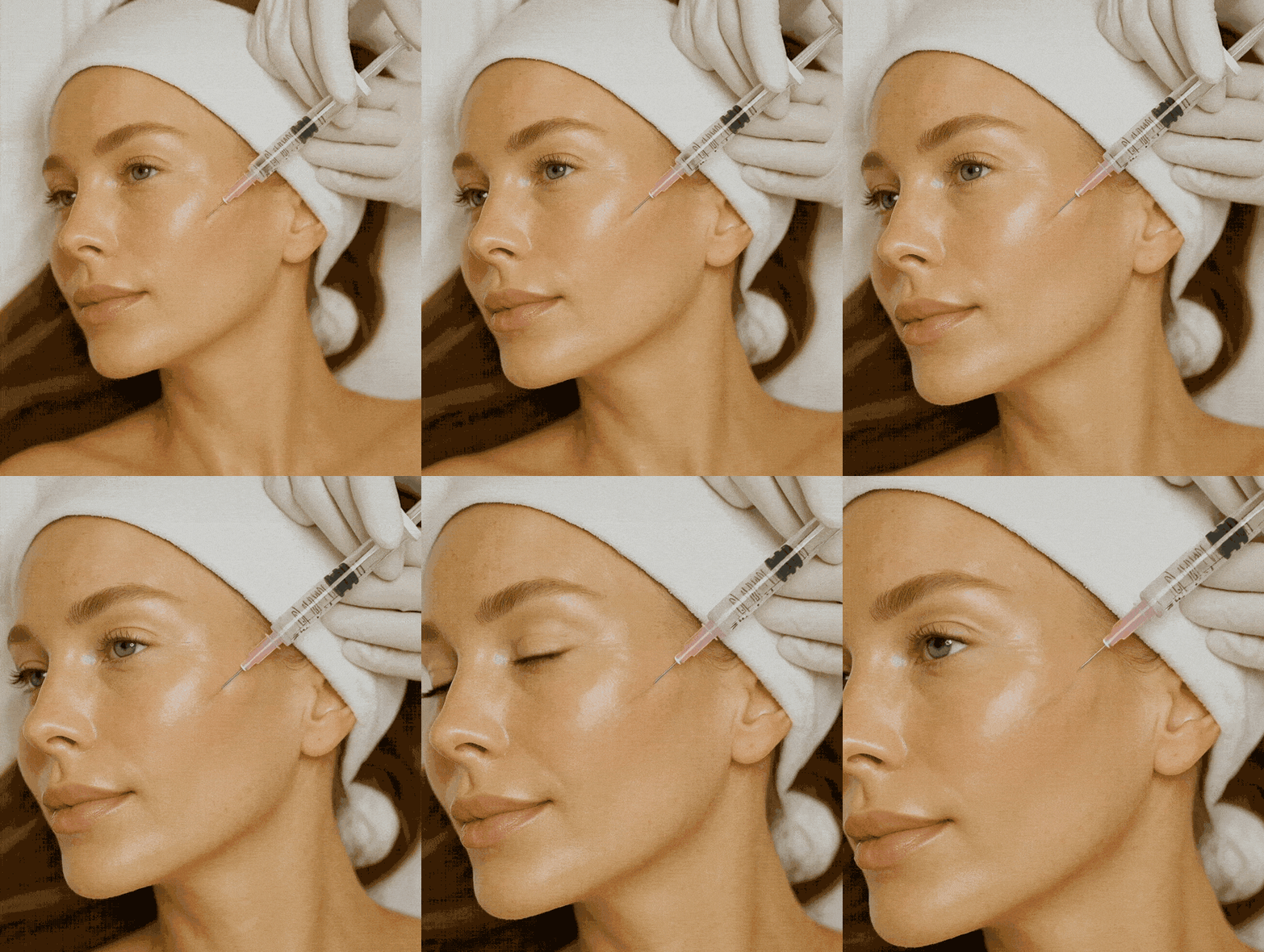
Peptides are given as a subcutaneous injection, which means just under the skin rather than into muscle. The needle is very fine, similar to what someone with diabetes uses daily. Most patients describe a brief pinch and nothing after that.
Our RNs walk you through the entire process the first time, including where to inject, how to rotate sites, and how to store your supplies. If you are self-administering at home, nobody sends you off without a proper walkthrough. If you would rather come in, that is an option too.
Expect the whole thing to take a couple of minutes once you know what you are doing.
Week 1: The Adjustment
Your body is being introduced to a signal it has been producing less of, and the first week is mostly about that introduction.
What you may notice:
- Mild redness, swelling, or tenderness at the injection site, which usually settles within a few days
- Some nausea, particularly with GLP-1 peptides
- Changes in appetite, depending on which peptide you are on
- Sleep shifting, sometimes deeper and sometimes just different
And if you feel nothing at all, that is the most common experience we hear. Peptides are not stimulants. What happens when you start peptide therapy in the first week is largely invisible, and that quiet is a sign the process is working the way it should rather than a sign it is not.
Weeks 2 to 3: The First Real Signs
This is usually when people start reporting something.
Sleep tends to be the earliest change. Patients describe falling asleep faster, waking less, or feeling like the sleep they are getting counts for more. Energy follows closely behind, less as a jolt and more as an absence of the afternoon crash.
Depending on your protocol, you may also notice:
- Faster recovery after workouts or physical strain
- Less general achiness
- Appetite regulation settling into a rhythm
- Mood evening out
If the changes are not the ones you were hoping for, mention it at your check-in rather than reading it as a bad sign. Peptides work on multiple systems at once, and the order things improve in is not always the order you ranked them.
Skin, muscle, and body composition changes are still weeks away. Those run on collagen and tissue timelines rather than signaling timelines.
Week 4: Checking Your Progress
By the end of the first 30 days on peptides, you should have a reasonable sense of how your body is responding.
This is a good point to look back rather than forward. If you noted where you started, whether that was your sleep quality, your energy at 3 p.m., or how long it took to recover from a hard week, compare it now. Gradual change is difficult to perceive day to day and much easier to see across four weeks.
It is also when we typically check in. Bring anything you noticed to that conversation, including things that seem too small to mention. Sleep changes and appetite shifts are often the most useful signals your provider gets.
Why the First Month Is Only the Beginning
Peptide therapy runs on a loading period, usually 3 to 6 months.
That phase often involves more frequent or higher doses to build results faster, after which most patients move to a maintenance schedule. That is why judging the treatment at week 4 is a mistake. You are one month into a protocol designed to work over several.
The peptide therapy experience that people describe as life-changing almost always comes from month three or four, not month one. Month one is where you establish the routine that gets you there.
Side Effects and When to Call Us
Peptide therapy is generally well tolerated, and most side effects are mild.
Common side effects include nausea and mild redness or swelling at the injection site, both of which typically subside within a few days as your body adjusts.
Call us if you experience anything that escalates rather than settles, any reaction that spreads beyond the injection site, persistent nausea that interferes with eating, or anything that simply feels wrong. Our team would rather hear from you and tell you it is normal than have you sit with a question for three weeks.
Six Things That Make the First Month Easier
None of these are complicated, and all of them make a difference in how month one goes.
- Do not skip doses: Peptides work on consistency, and gaps set the process back further than most people expect.
- Rotate your injection sites: It reduces irritation and keeps any one spot from getting tender.
- Take a baseline: Note your sleep, energy, and recovery in week 1, so you have something real to compare against.
- Keep your other habits steady: Changing your training, diet, and peptides all at once makes it impossible to know what is working.
- Ask questions as they come up: Week 2 is when most people think of something they forgot to ask. Reach out to us rather than waiting for your check-in.
- Give it the full month before judging it: At four weeks, you are still in the adjustment phase. By six weeks, you have enough to tell whether it is working for you.
Storing and Handling Your Peptides
This is the part nobody thinks about until they get home.
Most peptides require refrigeration and need to be protected from light and heat. Some arrive already mixed and ready to use. Others come as a powder that gets reconstituted, either by you or by your pharmacist, depending on what you are prescribed.
A few things worth knowing in your first month:
- Keep your supplies in the refrigerator, not the door, where the temperature swings every time it opens.
- Check the expiration window once reconstituted, since it is shorter than the unmixed shelf life.
- Plan ahead for travel, since peptides need to stay cool in transit.
- Never use anything that looks cloudy, discolored, or otherwise off.
Our RNs go through storage with you at your first appointment, and there is no such thing as a question too basic. Peptides handled correctly work the way they should. Peptides left on a counter over a warm weekend do not.
What Comes After Month One
Assuming your first month goes well, the next few months are where the compounding happens.
Sleep and energy improvements tend to hold and deepen. Recovery keeps improving. Skin, muscle, and body composition changes start becoming visible somewhere in the 2 to 4 month range, depending on the peptide and what you are targeting.
Your protocol may also change. Dosing gets adjusted based on how you respond, peptides get added or swapped, and once you reach your goals, you shift to maintenance. None of that is a setback. It is how a therapy built around one person is supposed to work.
Explore Peptide Therapy at Evexia Medspa
The first month asks for patience more than anything else, and it goes much more easily when someone is checking in along the way. At Evexia Medspa, our team includes nurse practitioners who walk you through your injections, answer the questions that come up in week 2, and adjust your protocol as your body responds. You are not handed a vial and sent on your way.
As a leading provider of peptide therapy in McLean, Virginia, we are proud to serve Northern Virginia and Washington, D.C., including Tysons Corner, Arlington, Falls Church, Vienna, Great Falls, and Fairfax County. Call us at (571) 774-0965 today to schedule your free consultation.