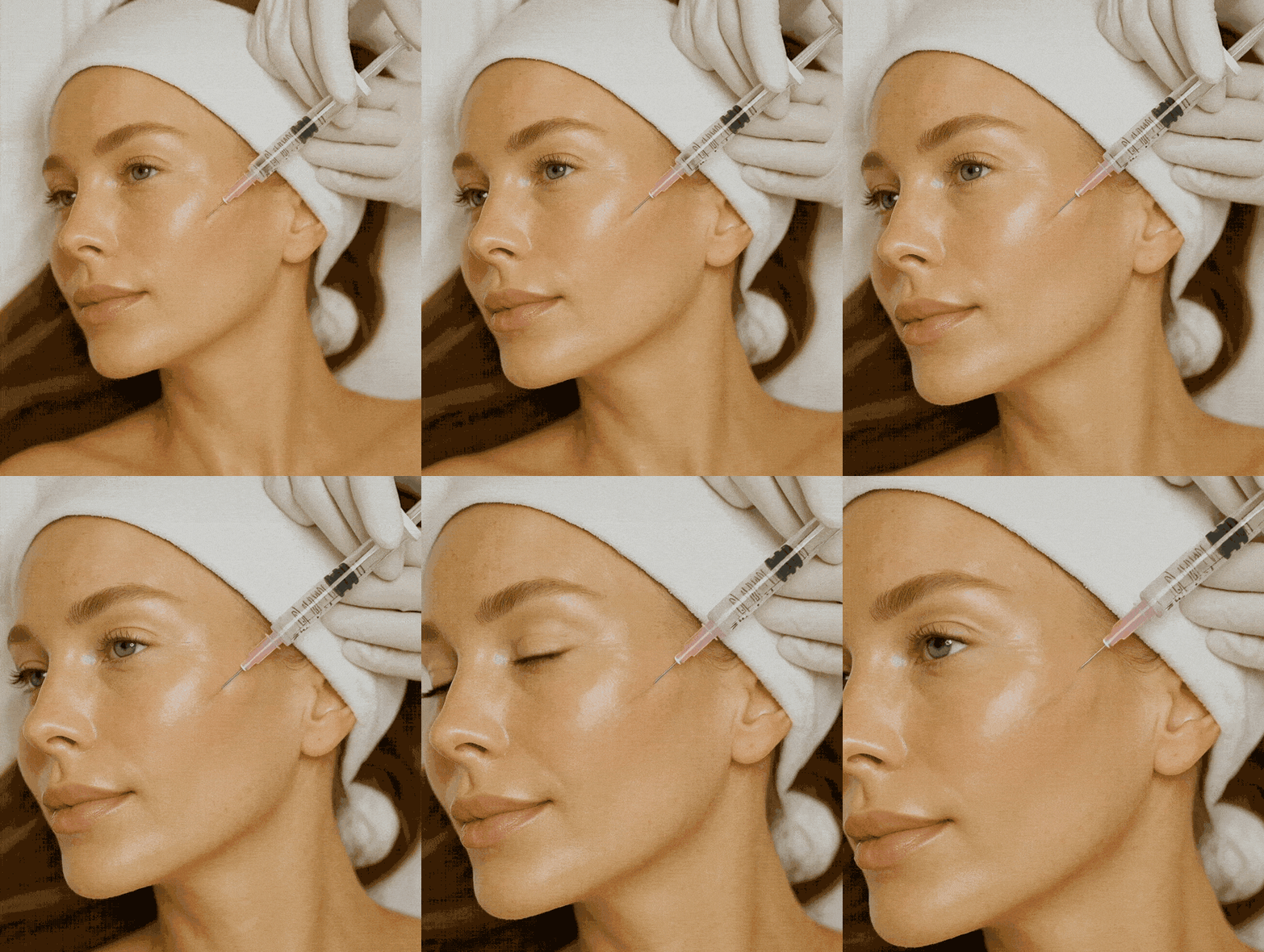


Many people notice their eyes look tired, shadowed, or hollow even after a full night’s sleep. For some, dark circles seem to linger no matter how well-rested they feel. Others see new hollows or creases under their eyes that can make them look perpetually fatigued or older than they are. These changes are common and can chip away at confidence, especially when they do not improve with lifestyle tweaks or skincare.
This article breaks down two of the most popular non-surgical options for under-eye rejuvenation: under-eye filler and PRF (Platelet-Rich Fibrin), including PRF EZ Gel. While under-eye filler vs PRF are often compared, they work very differently and are best suited for different under-eye concerns. Understanding PRF vs under-eye filler (how each works, what they treat best, and when a combination may be ideal) can help you make the most informed choice for your unique needs.
Key Takeaways
- The best treatment depends on why your under-eyes look tired. Volume loss, hollow tear troughs, thin skin, pigmentation, and genetics all require different treatment approaches.
- Under-eye filler restores lost volume immediately. Hyaluronic acid filler is ideal for correcting tear trough hollows, reducing shadowing, and creating a smoother transition between the lower eyelid and cheek.
- PRF rejuvenates the under-eye area naturally over time. By using your body’s own growth factors, PRF stimulates collagen production to improve thin, crepey skin and overall skin quality.
- PRF EZ Gel combines instant support with long-term regeneration. This advanced treatment offers subtle volume enhancement while encouraging ongoing collagen production for natural-looking results.
- Many patients achieve the best outcome with a personalized combination approach. An experienced injector can determine whether under-eye filler, PRF, PRF EZ Gel, or a combination of treatments will deliver the most balanced and refreshed appearance for your unique anatomy.
The Cause of Tired-Looking Eyes
Before exploring the best treatment for tired eyes, it’s essential to understand why the under-eye area can look fatigued or shadowed. Multiple factors contribute to this common concern, such as:
- Volume loss with age: Over time, the natural fat pads beneath the eyes diminish and descend, resulting in hollows and a sunken appearance.
- Hollow tear troughs: Some people are genetically predisposed to deeper tear troughs, which can create pronounced shadows.
- Thin, delicate skin: The skin under the eyes is some of the thinnest on the body. As it thins further with age or sun damage, underlying blood vessels and structures may become more visible.
- Visible blood vessels: Blue or purplish tones under the eyes may result from visible veins beneath the skin.
- Pigmentation: Genetics, sun exposure, allergies, or inflammation can cause brownish discoloration or hyperpigmentation.
- Mild skin laxity: Loss of collagen and elastin leads to loose, crepey skin or fine wrinkles under the eyes.
- Genetics: Family history plays a major role in under-eye anatomy, pigmentation, and the timing of early changes.
- Lifestyle factors: Poor sleep, stress, allergies, dehydration, rubbing the eyes, and even certain medications can worsen under-eye shadows and puffiness.
Identifying the root causes is crucial. For example, volume loss may call for a structural solution, while pigmentation or thin skin may respond better to regenerative or pigment-targeting options. This is why a careful assessment precedes any discussion of under-eye filler vs. PRF.
Understanding Why Your Under-Eyes Look Tired
It’s easy to assume all dark circles or hollows are the same, but the anatomy of the under-eye area is complex. Here’s how the most common contributors show up:
- Structural hollows: These appear as grooves or indentations running from the inner corner of the eye along the cheek, often deepening with age.
- Shadowing: When light hits hollow areas, it casts a shadow, exaggerating a tired look.
- Pigmentation: Brown or gray discoloration may be present even when the area is not hollow.
- Crepey or wrinkled skin: Thin, fragile skin may look crinkled or loose, especially when smiling or squinting.
Recognizing which of these factors is most prominent for you is key to choosing the most effective under-eye hollows treatment. This is also why no single approach (filler or PRF alone) can address every concern in every patient.
Under Eye Filler: Instantly Restoring Volume and Smoothness
Under eye filler uses hyaluronic acid-based injectables to restore volume where it has been lost and smooth the transition between the lower eyelid and cheek. Here’s how it works:
- Hyaluronic acid fillers: These are soft, gel-like substances that attract and hold water, mimicking the body’s own natural cushioning.
- Correction of tear trough hollows: Filler is placed precisely along the tear trough to fill in hollows and reduce shadowing.
- Immediate results: Most patients see a visible improvement in under-eye contours right after treatment.
- Improved under-eye/cheek transition: By smoothing the junction between the lower eyelid and cheek, filler creates a more rested, refreshed look.
It’s important to understand that under-eye filler is best for structural deficiencies, such as actual hollows or volume loss. It does not directly target pigmentation or thin skin. For those seeking under-eye filler for dark circles, success depends on whether the circles are due to shadowing (hollows) or true discoloration.
PRF for Under Eyes: Regenerative Rejuvenation from Within
PRF under eyes offers a different approach from filler. Platelet-Rich Fibrin is created by drawing a small amount of the patient’s blood, spinning it in a special centrifuge to concentrate platelets, growth factors, and fibrin, and then injecting this concentrate into the under-eye area. PRF under eyes works by:
- Stimulating collagen production: Growth factors in PRF encourage the body to rebuild and strengthen collagen and elastin.
- Improving skin quality: Over time, the treated skin may become thicker, firmer, and more elastic.
- Reducing crepiness and fine lines: Skin texture often improves gradually, resulting in a smoother under-eye area.
- Gradual, natural results: Because PRF stimulates the body’s own repair processes, benefits appear over weeks to months.
PRF is an appealing option for those looking for under-eye rejuvenation without synthetic materials. It is often chosen to improve thin skin, crepiness, or mild hollows, and is especially valued for patients seeking a natural, regenerative approach.
PRF vs. PRP: Understanding the Bio-Regenerative Advantage
You may have heard of PRP (Platelet-Rich Plasma) for under-eye rejuvenation, but PRF is a more advanced, next-generation technique. The main distinctions include:
- Processing method: PRF is spun at a lower speed, thereby preserving higher concentrations of platelets, leukocytes, and growth factors.
- Fibrin matrix: PRF forms a soft, gel-like scaffold that allows for sustained, slow release of regenerative components.
- Longer-lasting effects: Because the release of growth factors is gradual, PRF can promote more sustained collagen stimulation and tissue repair than PRP.
PRF EZ Gel: Bridging Structural Support with Natural Regeneration
PRF EZ Gel under eyes represents an innovation that blends the regenerative benefits of PRF with added volume and support. The process involves:
- Combining PRF with a heat-modified portion of plasma: This creates a thicker, gel-like texture.
- Delivering both immediate volume and gradual regeneration: PRF EZ Gel can address mild hollowness and thin skin while providing an initial plumping effect.
- Supporting the skin’s own healing: Growth factors continue to work over time, improving skin quality as the gel is gradually absorbed.
PRF EZ Gel under eyes is ideal for those who want a more comprehensive approach: some immediate contour improvement with the added bonus of natural collagen stimulation.
Under Eye Filler vs. PRF: A Side-by-Side Comparison for Clarity
Understanding the differences can help clarify the best fit for your needs. Here is a comparison:
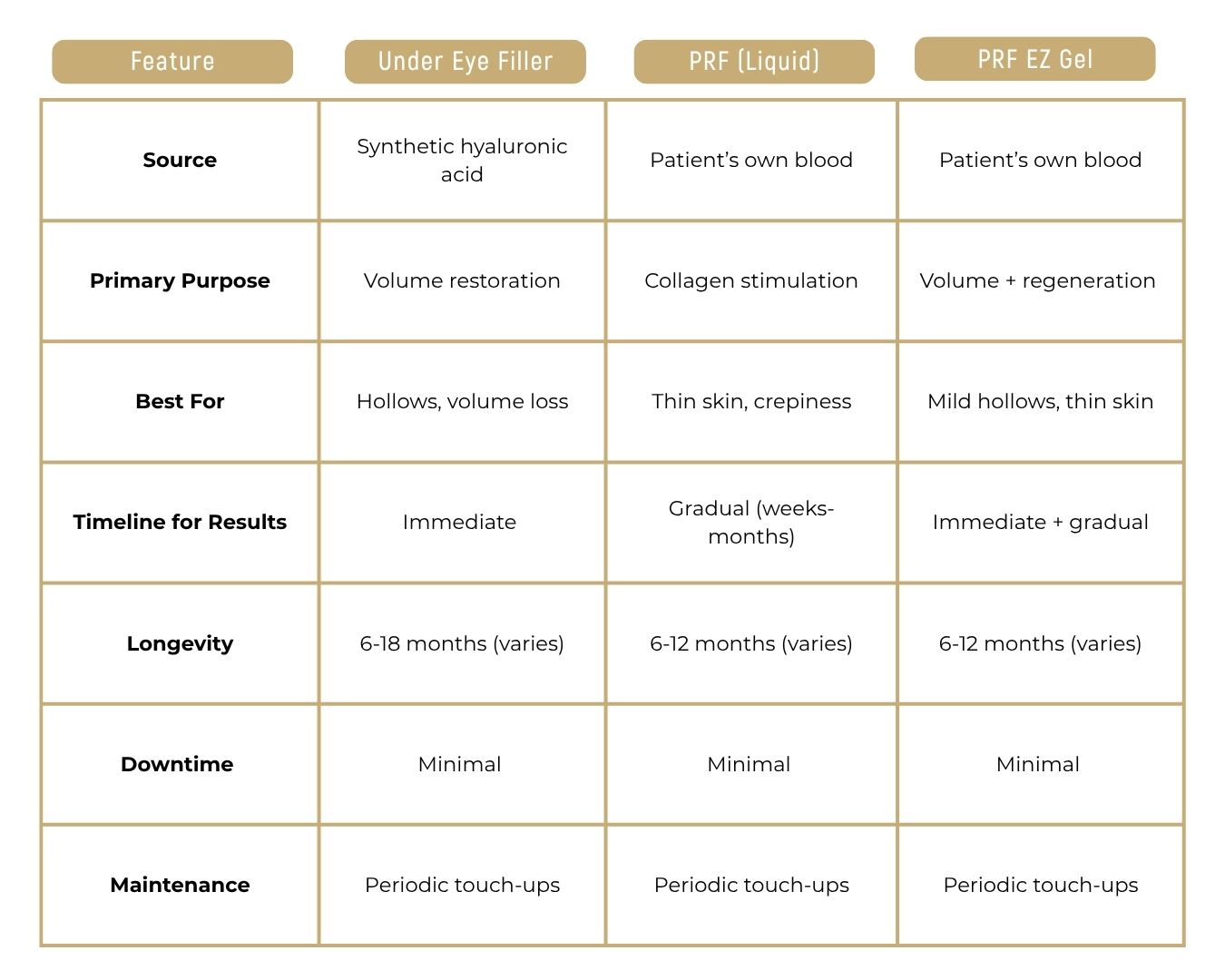
It’s important to remember that under-eye filler vs PRF, PRF vs under-eye filler, and PRF EZ Gel vs under-eye filler are not about picking a single universal winner. These therapies are complementary, and the right choice depends on your anatomy, goals, and comfort with each approach.
Addressing Under Eye Hollows: Filler’s Precision vs. PRF’s Regeneration
When it comes to under-eye filler vs PRF for hollow eyes, the best option often depends on the degree of volume loss.
Filler is often preferred when:
- There are significant tear trough hollows
- Moderate to severe volume loss is present
- Structural deficiencies need precise correction
PRF may be a better fit when:
- Hollowness is mild
- Skin is thin or crepey
- The patient prefers a regenerative or natural-material approach
- Avoiding synthetic fillers is a priority
Which is better for under-eye hollows, filler or PRF? In many cases, a combination therapy (using filler for immediate correction and PRF to support long-term skin quality) delivers the most natural and lasting results. Individual assessment is essential to determine the right approach for your anatomy and goals.
Tackling Dark Circles: A Targeted Approach
The question of under-eye filler vs PRF for dark circles depends on what is causing the discoloration:
- Pigmentation: If circles are brown or gray due to melanin, neither filler nor PRF will erase pigmentation, though PRF may subtly brighten the skin over time.
- Shadowing from hollows: Filler is often the best solution, as it fills in the hollows that cast shadows, making the area look brighter.
- Thin skin showing blood vessels: PRF for dark circles may help by thickening the skin, reducing the visibility of underlying vessels with repeated treatments.
Some patients benefit from both approaches: filler for immediate brightening and PRF for gradual skin strengthening. Choosing under-eye filler for dark circles or PRF for dark circles depends on the underlying anatomy identified during assessment.
Does PRF Effectively Treat Under Eye Bags?
A common misconception is that PRF under eyes can eliminate under-eye bags. Here’s what PRF can and cannot do:
PRF may improve:
- Skin texture and crepiness
- Fine lines and mild skin laxity
- The overall resilience of the under-eye skin
PRF does NOT remove:
- Significant fat pads
- Protruding or puffy under-eye bags caused by excess fat
For pronounced under-eye bags, surgical intervention may be more appropriate. PRF under the eyes is best for subtle improvements in skin quality rather than removing true fat pads. If you decide PRF is the right treatment for you, understanding what to expect afterward can help you prepare for a smooth healing process. Our PRP Recovery Aftercare guide covers recovery tips and post-treatment recommendations.
Can Under Eye Filler Combat a Tired Appearance?
Does under eye filler help tired-looking eyes? For patients whose fatigued appearance is due to volume loss, under eye filler can:
- Restore youthful contours
- Reduce shadowing caused by hollows
- Create a smoother, more rested transition between the lower lid and cheek
Proper patient selection is essential for success. When used for the right candidates, under-eye filler is considered one of the best treatments for tired eyes and is a cornerstone of modern under-eye rejuvenation. Because the under-eye area doesn’t exist in isolation, many providers also evaluate the cheeks, temples, and midface as part of a comprehensive facial balancing approach.
Choosing Your Ideal Treatment: Filler, PRF, or Both?
How do you decide whether PRF or filler is better for under-eyes? Consider the following factors:
- Severity of hollows: Deeper hollows often respond best to filler.
- Skin thickness and texture: Thin, crepey skin may improve with PRF’s regenerative effects.
- Degree of collagen loss: PRF can gradually restore firmness for those with significant collagen decline.
- Age and genetics: Both influence which concerns are most prominent and which treatments are likely to work best.
- Desired results and comfort level: Some patients prefer natural, regenerative options (like PRF), while others seek immediate results (filler).
- Timeline expectations: Filler works immediately; PRF takes weeks to months for visible effects.
Ultimately, the best non-surgical treatment for tired eyes is an individualized plan. A thorough consultation is the safest way to determine whether to choose under-eye filler or PRF based on your anatomy, goals, and preferences.
Enhanced Results: The Power of Combination Therapy
Many experienced injectors blend structural correction with filler and long-term collagen stimulation with PRF for optimal under-eye rejuvenation. The advantages of combination therapy include:
- Immediate, precise correction of hollows with filler
- Gradual improvement of skin texture and resilience with PRF
- Natural-looking outcomes that address both volume loss and tissue quality
Not every patient needs both treatments, but for those with multiple concerns (such as volume loss and skin thinning), combining under eye filler with PRF can deliver comprehensive results.
Your Personalized Path to Brighter, More Youthful Eyes
When it comes to under eye filler vs PRF for tired eyes, there is no universal winner. Filler provides immediate correction by restoring lost volume and smoothing hollows, while PRF stimulates your own collagen for gradual, natural improvement in skin quality. PRF EZ Gel offers a unique solution for those seeking both instant volume and regenerative benefits. Many people find that a custom treatment plan, rather than choosing only one option, best addresses their specific concerns.
If you’re considering under-eye filler PRF, a personalized consultation is the first step. The team at our McLean medspa in McLean, VA, takes the time to assess your anatomy, identify underlying causes, and guide you toward the safest and most effective approach. Ready to discover your best options? Schedule a consultation at Evexia to map out a tailored plan for under-eye rejuvenation that truly fits your needs.