


A beautifully balanced face isn’t created by one standout feature. It’s the way your cheeks, jawline, chin, and profile work together that creates a naturally youthful appearance.
That’s why choosing between cheek filler and jawline filler isn’t simply a matter of deciding where to add volume. Each treatment enhances different aspects of your facial structure, and the best approach depends on your anatomy, proportions, and personal goals.
If you’ve been wondering which treatment is right for you, here’s what you should know about how cheek filler, jawline filler, and modern facial balancing work together to create subtle, natural-looking results.
Key Takeaways
- Cheek filler and jawline filler serve different purposes. Cheek filler restores midface volume and creates subtle lift, while jawline filler enhances definition and improves your facial profile.
- Facial balancing is about harmony, not changing one feature. The most natural-looking results come from treating the face as a whole rather than focusing on a single area.
- The best treatment depends on your anatomy and goals. Factors like volume loss, facial proportions, skin quality, and profile all influence whether cheek filler, jawline filler, or a combination of both is the right choice.
- Less is often more. Conservative filler placement in the right areas typically creates a more balanced, refreshed appearance than adding a large amount of filler to one feature.
- A personalized consultation is essential. An experienced injector can evaluate your facial structure and recommend a customized treatment plan that enhances your natural features while maintaining facial harmony.
What is Facial Balancing?
Facial balancing is an approach to aesthetic treatment that looks at your face as a whole rather than focusing on a single feature. Instead of asking how to improve your cheeks or define your jawline, an experienced injector considers how each feature works with the others to create natural proportion and harmony.
The cheeks, jawline, chin, temples, and lips all influence one another. Enhancing one area can subtly improve another, which is why dermal fillers for facial balancing are designed to create overall facial harmony rather than treat isolated concerns.
Why Facial Balance Matters
Rather than chasing trends, the goal is to enhance your existing features in a way that looks refreshed and balanced. Small adjustments in the right areas often have a greater impact than making dramatic changes to a single feature.
Because every face is unique, there is no single best filler for facial balancing. A skilled injector evaluates your facial anatomy, profile, existing volume, and aesthetic goals before recommending treatment. For some patients, cheek filler creates the greatest improvement. For others, jawline filler, or a combination of treatments, produces the most natural-looking result.
The Art of Cheek Filler: Sculpting Your Midface
Cheek filler is designed to restore volume, improve facial contours, and support the midface. As we age, the cheeks naturally lose fat, collagen, and structural support, which can create a flatter appearance, deepen the folds around the mouth, and contribute to early sagging in the lower face.
By restoring volume where it has been lost, cheek filler enhances cheekbone projection and helps create smoother, more youthful facial contours.
How Cheek Filler Changes the Lower Face
One of the biggest misconceptions is that cheek filler only affects the cheeks. In reality, restoring support to the midface can subtly improve the appearance of the entire face. Added structure in the cheeks can soften shadows, reduce the appearance of early jowling, and create a smoother transition between the cheeks and jawline.
Modern cheek filler is not about creating oversized cheekbones. It is strategically placed to complement your natural anatomy and improve facial balance. Many patients are surprised to find that after restoring volume to the midface, their lower face appears more lifted and defined without directly treating the jawline.

Defining Your Profile: What Jawline Filler Achieves
The jawline plays a major role in defining your face shape and creating overall balance. Jawline filler is used to add definition, improve symmetry, and create a sharper or more sculpted appearance, especially when the lower face lacks natural contour.
Jawline filler for face shape works by enhancing the existing bone structure, not changing it. It can provide a more angular look, refine the transition between the neck and face, and create a cleaner profile. For those with a weaker jawline or soft definition, jawline filler can offer a subtle but impactful improvement.
This treatment is particularly popular for individuals who want to strengthen their lower facial structure, correct mild asymmetry, or enhance their side profile. By improving the jawline, providers can help balance the proportions of the face, ensuring the chin, cheeks, and jawline work in harmony.
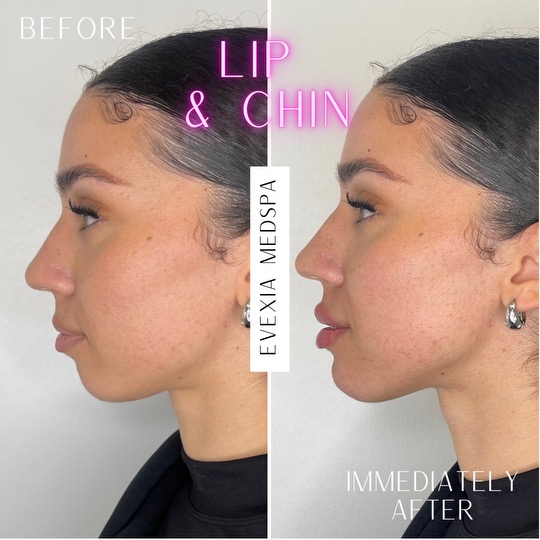
Cheek Filler vs. Jawline Filler: A Direct Comparison
Choosing between cheek filler vs jawline filler depends on your unique facial anatomy, concerns, and goals. Below is a comparison to help you understand how each treatment differs and how they can work together:
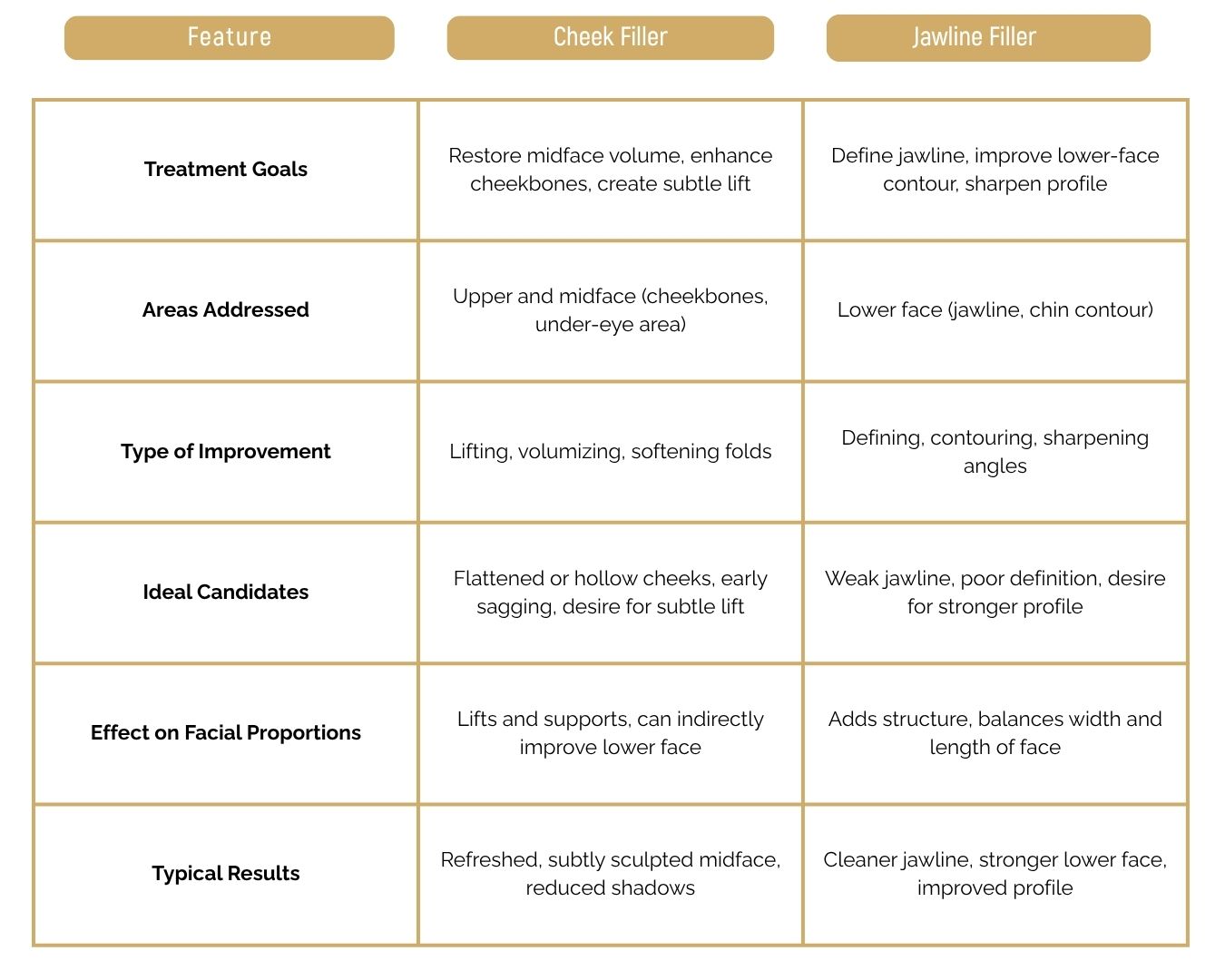
This comparison shows how cheek filler and jawline filler address different concerns. Both are essential tools in a facial-balancing strategy, and many patients find that combining treatments yields the most harmonious result.
Beyond the Cheeks: Does Cheek Filler Influence the Jawline?
A frequent question is whether cheek filler can improve the jawline. The answer is that while cheek filler does not directly change the jawline, it can have an indirect effect. By restoring volume to the midface and cheekbones, the filler supports and lifts tissues that may have started to sag with age. This subtle lift can reduce the appearance of shadowing and early jowling, making the jawline appear more defined.
That said, if you desire significant contour or angularity in the jaw area, cheek filler alone may not provide the definition you are looking for. In these cases, jawline filler is recommended to directly enhance the lower face. The best approach is determined through a personalized assessment in which your injector will evaluate how each area contributes to your overall facial harmony.
Tailoring Your Treatment: Which Filler is Best for Your Goals?
Patients often ask whether cheek filler or jawline filler is better for facial balancing. The answer depends on your unique facial structure and concerns. Here’s how to decide.
Cheek filler may be a better option if:
- You have flattened or hollow cheeks
- There is noticeable volume loss in the midface
- Early facial sagging is a concern
- You want to restore cheekbone definition and subtle lift
Jawline filler may be a better option if
- Your jawline lacks definition or appears weak
- You want a stronger side profile
- Lower face asymmetry is present
- You wish to improve the separation between your face and neck
Many patients benefit from a combination of both treatments. Conservative enhancement across several areas often produces a more natural, balanced result than focusing on a single feature. An individualized plan ensures that the best filler for facial balancing is selected based on your anatomy and goals. If you find yourself asking whether you could use cheek filler or jawline filler, a consultation with a skilled provider can clarify which approach will help you look your best.

A More Defined Look: Filler for Facial Slimming
It’s a common misconception that adding filler always results in a fuller or rounder face. In reality, strategically placing cheek filler rather than jawline filler for a slimmer face can improve facial proportions and create the illusion of a more defined, slender profile.
Cheek filler enhances contour by restoring support in the midface, which can help lift sagging skin and reduce the heaviness in the lower face. At the same time, jawline filler sharpens and defines the lower third of the face, creating a clearer separation between face and neck. Both treatments, when performed with an artistic and conservative approach, contribute to the best filler treatment for a more defined face. Placement, technique, and product selection matter far more than the amount of filler used.
Addressing Specific Concerns: Sagging Cheeks vs. Jawline Definition
Different facial concerns call for different solutions. Here is how each treatment addresses specific issues:
Cheek Filler for Sagging Cheeks
- Restores lost volume in the midface
- Supports aging tissues and reduces hollowness
- Softens deep folds and shadows
Jawline Filler for Definition
- Improves contour and sharpens angles
- Defines the jawline and enhances the profile
- Balances facial proportions by strengthening the lower face
It’s important to note that dermal fillers can improve facial contours but do not remove excess skin or replace surgical lifting procedures. If your primary concern is sagging due to significant skin laxity, your provider may suggest a different approach or combine fillers with other modalities.
Can Cheek and Jawline Filler Be Combined?
Many of the most natural-looking results come from treating the face as a whole rather than focusing on a single feature. Combining cheek filler and jawline filler allows your provider to improve facial proportions from multiple angles, creating subtle enhancements that work together instead of drawing attention to one area.
Rather than making dramatic changes, small adjustments throughout the face can have a significant impact on overall harmony. This is why many patients notice the biggest difference in their cheek filler vs. jawline filler results before and after when treatment is customized to their unique anatomy rather than following a one-size-fits-all approach.
If you’re wondering which filler is best for facial structure, the answer often isn’t choosing one treatment over the other. A personalized facial balancing plan may include cheek filler, jawline filler, or both, depending on your goals and facial proportions. To learn more about why treating multiple areas can create more natural-looking results, see our guide on Facial Balancing vs. Single-Area Filler.
What to Expect After Cheek or Jawline Filler
Most patients experience only mild, temporary side effects after cheek or jawline filler. Swelling, bruising, tenderness, and minor asymmetry are common during the first few days as the filler settles and your body begins to heal.
While many people notice an immediate improvement, the final results are typically visible within about two weeks, once swelling has resolved. Following your provider’s aftercare instructions can help support proper healing and ensure the best possible outcome.
If you’re preparing for treatment or simply want to know what recovery looks like, our Botox & Filler Recovery Tips guide explains what to expect during the healing process, along with practical tips to minimize swelling and care for your results.
Your Path to Balanced Beauty: Making an Informed Choice
Cheek filler and jawline filler each play an important role in creating facial harmony, but neither is the “better” treatment. The right choice depends on your facial structure, existing volume, profile, and aesthetic goals. For many patients, the most natural-looking results come from a personalized approach that considers how all features work together rather than focusing on a single area.
If you’re considering cheek filler or jawline filler in McLean, VA, the first step is a comprehensive consultation. An experienced injector can evaluate your facial anatomy, discuss your goals, and recommend a treatment plan that enhances your natural features while maintaining balance and proportion.
Whether you’re interested in restoring lost volume, refining your profile, or exploring a complete facial balancing plan, learning about your options is a great place to start. Explore our Dermal Fillers Service Page to learn more about available treatments, or visit our Facial Balancing Service Page to see how a customized approach can help you achieve natural-looking, harmonious results.